
For years, the narrative has been simple: “Young people can’t buy homes.” But the reality is more nuanced and far more strategic. Millennials and Gen Z are still buying homes, but they are entering the market later, adapting to affordability pressure, and redefining what a “starter home” looks like.
For readers tracking both homeownership trends and multifamily real estate investment strategy, this shift is critical. It is changing who buys single-family homes, how long households remain renters, and where smart investors should place their bets.

The clearest signal is not that younger buyers have disappeared. Its affordability has made entry more selective and constrained.
-> Gen Z made up 4% of buyers.
-> Millennials fell to 26%.
-> First-time buyers dropped to 21%, the lowest share on record since NAR began tracking in 1981.
Aspiration is not dead, but the path into homeownership is narrower than ever.
Gen Z may still be a small share of the market, but their buying habits reflect a major shift in housing demand.
-> 35% of Gen Z buyers were single women.
-> 17% were unmarried couples.
Gen Z is not waiting for marriage, children, or perfect timing. They are buying to enter the market as early as they can.
What This Means
This changes entry-level demand, household formation patterns, and what buyers are willing to accept. Builders, agents, and investors are dealing with a buyer who is more individualistic, more budget-conscious, and less tied to traditional lifestyle norms.
Millennials are no longer one single buyer group. They are separated into two different profiles.
Older Millennials (35+)
Median household income: $132,700
Buying the largest homes
Median home size: 2,100 sq. ft.
Younger Millennials (<35)
60% were first-time buyers
Still struggling to gain a foothold in the market
When people talk about Millennial demand, they are really talking about two distinct realities: move-up buyers with equity and income, and entry-level buyers still seeking support.


Younger buyers are not giving up on homeownership. They are adjusting the way they get there.
-> 26% of younger Millennials received down payment help through a gift or loan.
-> Buyers are becoming more financing-aware and pragmatic.
-> Choosing the right loan is becoming as important as choosing the right home.
Single-family demand is being reshaped by tighter budgeting, outside support, smarter loan selection, and careful timing. This is not simply a story of young people being unable to buy. It is also a story of young people buying more strategically.
This generational shift does not make single-family irrelevant. It makes the market more layered.
As your content argues, disciplined investors look for diversification and durable income. When access for first-time buyers is limited, rental demand can stay stronger for longer, especially in growth markets.
The future should not be framed as single-family versus multifamily. The stronger view is understanding how delayed home buying supports rental demand. That is where multifamily real estate investment becomes a strategic lens rather than just a separate asset class.
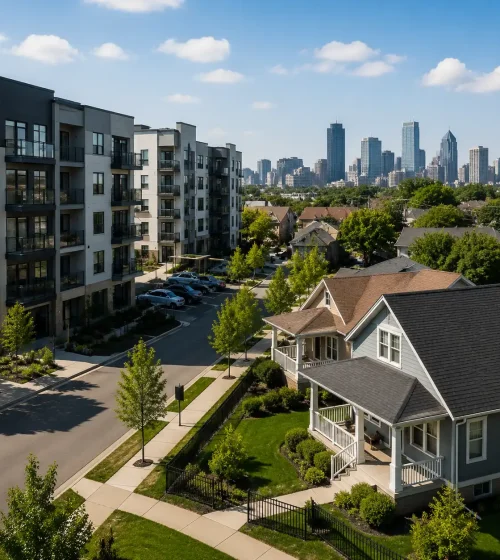
The most useful way to read this market is through behavior, not headlines.
Gen Z buyers, especially single women and unmarried couples, are more important than older models assumed.
Rental housing remains strategically relevant
When ownership takes longer, demand for quality rentals stays elevated.
For Landlords
Legal awareness still matters. As your Florida Rental Evictions Guide highlights, demand may look strong on paper, but execution matters. In markets where affordability keeps households renting longer, operating discipline, tenant screening, and legal knowledge are just as important as reading demographic trends.
Many housing articles stop at one point: affordability is changing the market. That is true, but it is incomplete.
Millennials and Gen Z are reshaping the market through:
-> new household formation
-> different financing behavior
-> delayed first-time home buying
-> a widening gap between move-up and entry-level buyers
This is a more useful framework for anyone writing, investing, advising, or planning in residential real estate.
It also sharpens the conversation on single-family and multifamily. Single-family homes still matter deeply, but investment opportunities increasingly favor those who understand both ownership barriers and rental demand.

Yes. Millennials and Gen Z are still buying homes, but under tighter conditions and with different household structures.
Gen Z is entering with strong intent, often as single women or unmarried couples. Younger Millennials are more affected by affordability pressure, while older Millennials remain strong move-up buyers.
Investors should watch both ownership demand and delayed renter demand. When first-time buyer access declines, rental housing can remain strong, which keeps multifamily relevant as a strategic asset class.
Demand does not remove execution risk. Landlords still need strong screening, documentation, and legal awareness, which is why local operating knowledge remains essential.
Millennial and Gen Z homebuying habits are redefining the single-family market by changing who buys, when they buy, and how they qualify.
Gen Z is entering earlier and more independently.
Millennials are split between equity-powered move-up buyers and affordability-constrained first-time buyers.
For readers evaluating both single-family demand and multifamily real estate investment, the stronger approach is to stop viewing these trends in isolation. Homeownership pressure, rental demand, financing behavior, and operating discipline are all connected.
The following content is provided for educational and informational purposes only. It does not constitute financial, investment, or legal advice. Viewers are encouraged to conduct their own research and consult with a licensed professional before making any decisions. The views and opinions expressed are those of the presenter and do not necessarily reflect the official policy or position of any affiliated organization.