
Quick Answer Summary: A real estate PPM is the disclosure document behind a private offering. It tells you what the deal is, how the money works, what rights you have, and what could stop your returns. You do not need a law degree to read one well: start with the risk factors, follow the fees and the waterfall, verify the sponsor, and confirm the offering terms before you sign anything.
A real estate PPM can look intimidating: a long, dense PDF written for attorneys. But if you are considering a multifamily real estate investment, the Private Placement Memorandum is one of the most important documents you will review, and skipping it for the projected returns is how investors miss the warning signs.
A Private Placement Memorandum (PPM) is the legal disclosure document a sponsor or fund gives potential investors when it raises money through a private securities offering. Its job is not to sell the deal. Its job is to disclose the offering terms, material risks, and key facts you need before investing. Most private offerings rely on Regulation D exemptions (see Carta, SEC Rule 506(b) and SEC Rule 506(c)).
You do not need a law degree to read one well. You need a few definitions and a clear reading order.
Three documents usually arrive together. The PPM explains the offering, the risks, the fees, and the structure. The subscription agreement is what you sign to commit your capital and confirm your investor eligibility. The operating agreement governs how the LLC works after you invest: voting rights, distributions, and manager authority.
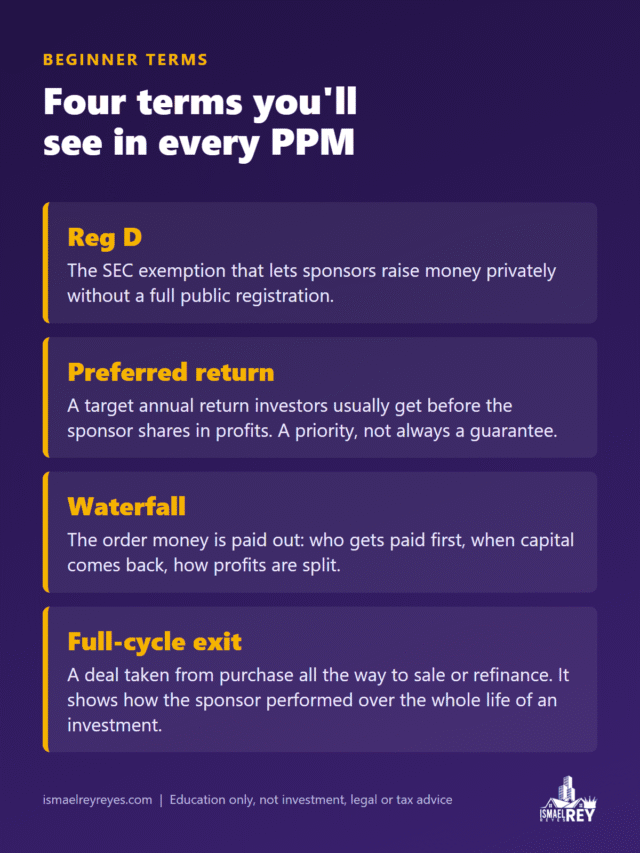
Four terms repeat throughout a PPM:
A typical PPM runs 50 to 150 pages, and five sections deserve most of your attention. Start with the risks, even though most investors skip them.
This is where the sponsor discloses what could hurt the deal: construction delays, lease-up problems, interest-rate exposure, refinancing risk, cost overruns, capital call provisions, and loss of liquidity. A good risk section is specific to this property, loan, market, and business plan. A weak one is generic enough to fit any offering. If the language feels broad, slow down and ask why.


Look for acquisition, asset management, refinancing, disposition, construction management, and loan guaranty fees, plus organizational and offering expenses. Then compare the fee section to the use of proceeds table: how much of your money goes into the property versus fees, reserves, debt costs, and sponsor compensation.
For investors focused on long-term passive multifamily real estate investing, this is the fastest way to spot a gap between the story being sold and the economics underneath it.
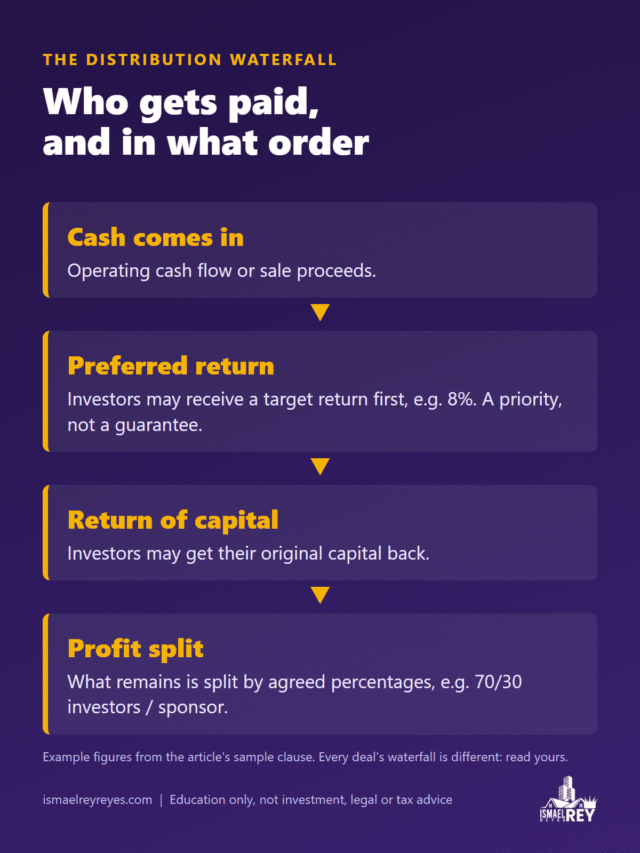
The waterfall sets the order in which cash is distributed. A common sequence: investors receive a preferred return, then a return of capital, then the remaining profits are split between investors and the sponsor at agreed percentages. Some waterfalls add multiple hurdles, catch-up provisions, and changing splits.
Clear clause: "Investors receive an 8% preferred return, then a return of capital, then remaining profits are split 70/30 between investors and the sponsor."
Less investor-friendly: "Distributions may be made in the Manager's discretion and subject to available cash, reserve requirements, and other priorities determined by the Manager." The more discretion the manager has, the more carefully you should review when money can be withheld. If the sponsor cannot explain the waterfall in plain English, that is a warning sign.

Do not stop at a polished bio. Verify the sponsor's real operating history:
A sponsor who has bought twenty deals but never exited one is still unproven from an investor-return perspective. Compare the sponsor's claims with the practical risks that show up in multifamily real estate opportunities.
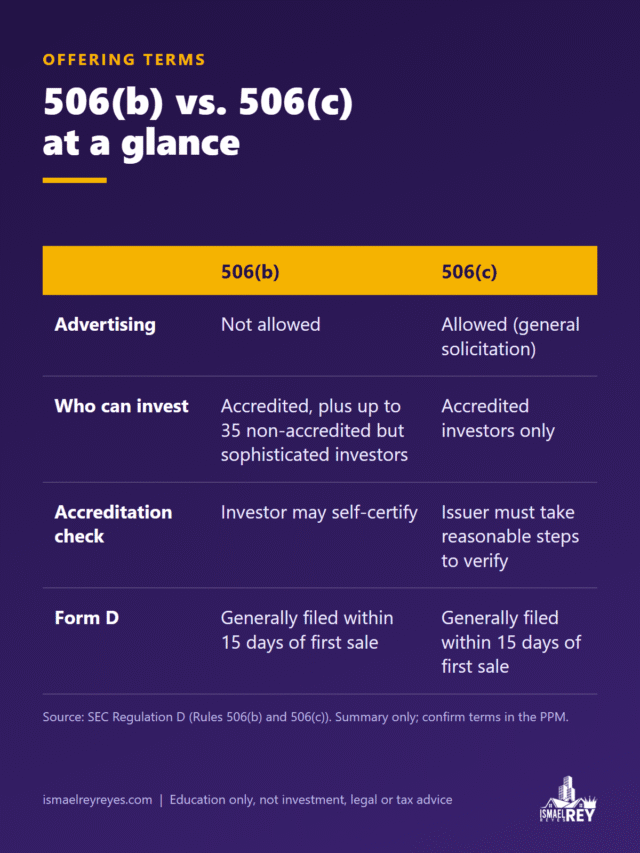
A Rule 506(b) offering can raise an unlimited amount, does not allow general advertising, and may include up to 35 non-accredited but sophisticated investors. A Rule 506(c) offering allows general solicitation, but every purchaser must be an accredited investor and the issuer must take reasonable steps to verify that status.
Also confirm whether a Form D was filed. It is the SEC notice filing for exempt offerings under Regulation D, generally filed within 15 days after the first sale of securities. See the SEC Form D notice guidance.
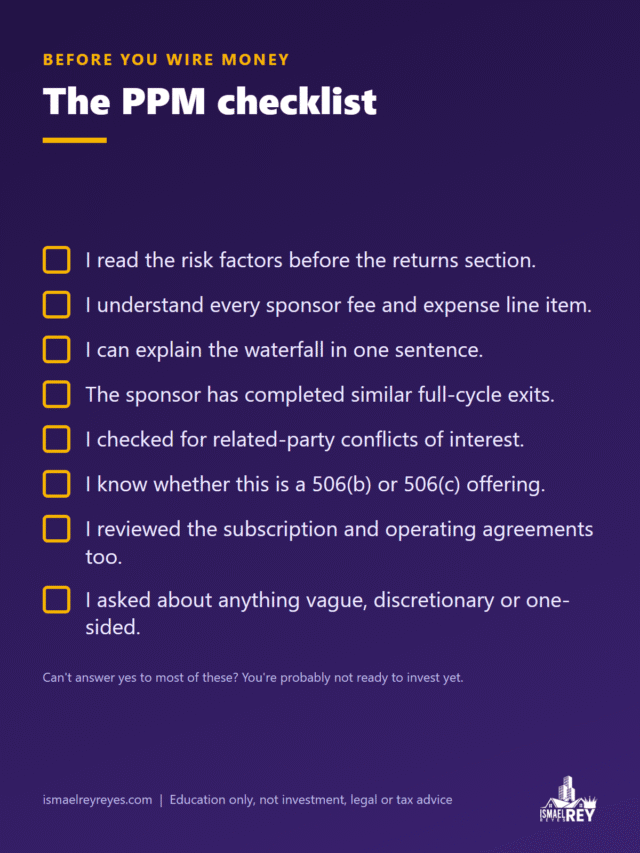
Before wiring money, ask yourself:
Red flags worth slowing down for: generic risk language, vague fees, no full-cycle track record, heavy manager discretion, confusing waterfall language, and pressure to sign before you have read everything. One red flag does not kill a deal, but it should trigger more diligence, not less.
If you only have an hour: risk factors, then fees and use of proceeds, then the waterfall, then sponsor background, then offering terms, and finally the subscription and operating agreements.
A real estate PPM is one of the best due-diligence tools a passive investor has. You do not need a law degree to read it well. You need a repeatable process: start with the risks, follow the money, understand the waterfall, verify the sponsor, and confirm the offering terms. Apply it every time and you will ask sharper questions and stop treating a private investment like a leap of faith.

Not by itself in the same way a signed contract is. The PPM is mainly a disclosure document. Your binding obligations usually arise through the subscription agreement and the operating agreement.
For most offerings, plan on a few focused hours at a minimum. If the deal has a complicated waterfall, fund structure, or unfamiliar sponsor, expect it to take longer.
For larger investments, first-time sponsors, or any situation where the terms feel unclear, legal review can be money well spent.
Start with the risk disclosures. Projected returns are easy to advertise. Risks tell you what could stop those returns from ever happening.
The following content is provided for educational and informational purposes only. It does not constitute financial, investment, or legal advice. Viewers are encouraged to conduct their own research and consult with a licensed professional before making any decisions. The views and opinions expressed are those of the presenter and do not necessarily reflect the official policy or position of any affiliated organization.