
Commercial real estate investment is experiencing renewed momentum in 2026, with investors seeing clearer opportunities across multiple property sectors. As the market stabilizes after years of uncertainty, knowing how to analyze a city for Commercial Real Estate Investment has become more critical than ever.
Whether you’re pursuing passive real estate investing or actively building your portfolio across office, retail, industrial, and other commercial sectors, understanding the right market fundamentals can mean the difference between strong returns and costly mistakes. Let’s explore the key factors you need to evaluate when analyzing a city for commercial property investment and making informed Commercial Real Estate investment decisions.
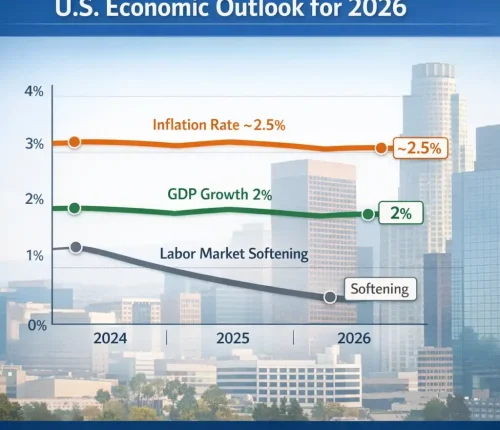
The foundation of any strong commercial real estate market is robust economic growth. In 2026, the U.S. GDP is forecast to grow at 2.0% with softening labor market conditions and inflation averaging 2.5%. While this represents moderating growth, it provides a stable environment for commercial real estate investment decisions. Source
Look for markets with a strong presence across multiple sectors, including technology, healthcare, finance, and logistics. According to 2026 data, commercial real estate investment activity is expected to increase by 16% to $562 billion, nearly matching pre-pandemic annual averages.
When analyzing a city, review employment data from the Bureau of Labor Statistics. Cities that show steady job creation across diverse industries typically support stronger demand across all commercial property types. Markets such as New York City, Miami, Raleigh, and Tampa are showing particularly strong momentum heading into 2026. Source
Different commercial property types perform differently across markets. Understanding these sector-specific dynamics is crucial for passive real estate investing success.
After years of challenges, the office sector is showing signs of recovery in 2026. The national office vacancy rate improved to 18.2% in January 2026—down 150 basis points year-over-year. This marks a significant turning point after vacancy peaked at higher levels in 2024.
Markets seeing the strongest office recovery include Manhattan (13.1% vacancy, down 350 basis points), San Francisco (down 460 basis points year-over-year), and Houston (down 380 basis points). These improvements are driven by declining sublease availability, which fell 20% from its 2024 peak. Source
However, performance varies dramatically between newer prime space and older secondary properties. Investors should focus on high-quality, well-located assets in markets with strong return-to-office trends.
Industrial real estate remains a strong performer driven by e-commerce growth and AI infrastructure needs. However, supply and demand are moving back into balance in 2026. National industrial vacancy is projected to rise to 8.6%, up 60 basis points, as approximately 200 million square feet of new space is delivered.
The key is market selection. Smaller infill and logistics facilities in tight markets continue outperforming large-format warehouses in oversupplied Sun Belt locations. Look for markets where construction pipelines are moderating, and absorption remains steady.
Retail vacancy rates remain near historic lows at 5.7% nationally, compared to pre-pandemic levels around 7%. Limited new supply over the past decade, combined with robust backfilling activity, creates favorable conditions for retail investors.
Grocery-anchored and neighborhood shopping centers continue performing exceptionally well. Fourth quarter 2025 saw the strongest quarterly absorption since Q4 2023, with 3.4 million square feet of positive net absorption. Holiday sales grew by 3.9%- 4.2% year-over-year despite economic uncertainty.
Markets showing particularly strong retail fundamentals include Montgomery, Alabama (vacancy down 170 basis points), Northwest Arkansas (down 140 basis points), and San Francisco (down 70 basis points).
Cap rates provide crucial insight into market pricing and expected returns. In 2026, cap rates for most commercial property types are expected to compress by 5 to 15 basis points as the market stabilizes and investment activity increases.
Retail properties show the highest cap rates at approximately 6.5-7%, followed by office at 6.54% to 7.39% depending on quality and location. Industrial properties in strong markets trade at lower cap rates, reflecting higher demand and lower perceived risk.
Higher cap rates indicate higher expected returns but also higher risk. The increase in office cap rates reflects the sector's repricing as it adjusts to remote work. For those interested in Passively Investing in Multi-family Properties or other commercial sectors, understanding these risk-return dynamics is essential.
Major infrastructure projects significantly impact commercial real estate values. Review city and regional transportation plans, including:
Cities investing heavily in infrastructure often see commercial property appreciation as accessibility improves and businesses relocate to take advantage of better connectivity.

Demographics drive commercial real estate demand. In 2026, key trends include:
Cities with growing high-income populations support premium retail, Class A office space, and luxury hospitality. Markets with strong technology sectors often see elevated demand for data centers and modern office space.
Capital market dynamics reveal investor sentiment and opportunity. In early 2026, investment volume has accelerated to a three-year high. Office investment alone reached $4 billion in January 2026, with properties selling at an average of $278 per square foot—up 6.1% in 2025, the first increase since 2021.
Markets attracting significant capital inflows typically offer the best combination of risk and return. However, increased competition can compress yields, so timing and deal selection remain critical for long-term Commercial Real Estate investment success.

Analyzing a city for commercial real estate investment requires evaluating multiple interconnected factors:
Economic growth and employment diversity (2%+ GDP growth, varied industries)
Property-specific fundamentals by sector (vacancy trends, absorption rates)
Cap rate environments and pricing dynamics (5-15 basis point compression expected)
Infrastructure development and connectivity
Regulatory environment and tax structures
Demographic trends supporting demand
The strongest markets in 2026 combine economic resilience, sector-specific recovery momentum, reasonable pricing, and favorable demographics. Whether pursuing passive real estate investing or active management, these fundamentals guide you toward markets positioned for success.
Conclusion
Commercial real estate in 2026 is entering a period of stabilization and renewed opportunity. Investment activity is accelerating, fundamentals are improving across most sectors, and cap rates are beginning to compress. By thoroughly analyzing economic conditions, property-specific performance, regulatory environments, and demographic trends, investors can identify cities offering the best risk-adjusted returns.
The market rewards those who combine thorough analysis with strategic conviction. Choose your markets wisely, and your Commercial Real Estate Investment will benefit from the improving fundamentals shaping 2026 and beyond.
The most important factor is economic stability and job growth. A city with a diverse and growing economy—across sectors like technology, healthcare, finance, and logistics—creates consistent demand for commercial spaces such as offices, retail, and industrial properties. Without strong economic fundamentals, even attractive properties can struggle to deliver returns.
There is no one-size-fits-all answer, but industrial and grocery-anchored retail properties are considered relatively stable in 2026. Industrial benefits from e-commerce and logistics demand, while retail—especially essential-based centers—has low vacancy rates. However, the “safest” option ultimately depends on the specific city, local demand, and supply conditions.
Cap rates help investors understand expected returns relative to risk. Higher cap rates may indicate better income potential but often come with higher risk or weaker market fundamentals. Lower cap rates usually reflect strong demand and lower risk. Comparing cap rates across cities and property types helps investors identify where pricing aligns with their risk tolerance and investment strategy.
The following content is provided for educational and informational purposes only. It does not constitute financial, investment, or legal advice. Viewers are encouraged to conduct their own research and consult with a licensed professional before making any decisions. The views and opinions expressed are those of the presenter and do not necessarily reflect the official policy or position of any affiliated organization.